Culture shock

When a Pakistani woman or man comes to Barranquilla, they will meet many things that can astonish them. Some of these things are:

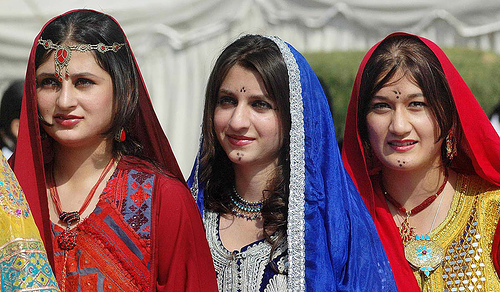
Dressing. As for women, garments such as shorts, basic blouses, strapless are worn in Barranquilla. These garments expose legs and arms. They are used primarily because of the constant hot weather that occurs. Women in Pakistan is prohibited from wearing such garments. And as for men, you can amaze because in Barranquilla, men wear shorts and in Pakistan, men have to cover everything between the navel and the knee.

Food. People in Pakistan don’t eat pork, but in general in Colombia that is not a problem, so that for them it may seem in bad taste or they may be amazed because of the facility with which you can find pork in any place or restaurant. And although gastronomy does not vary much, they are not used to our way of preparing meals.

The language. Despite receiving Spanish classes, the way to communicate will also be a problem for any foreigner. Barranquilleros handle many expressions typical of the region, what we can call jargon. Our treatment towards other people It is a bit daring, we treat others with a lot of confidence and use with a lot frequency, words that may even have been invented and then appropriated by ourselves.

Another thing that can be shocking is that in Barranquilla, people are very indulgent, they act impulsively and they are flexible with rules. Otherwise, in Pakistan, people are extremely restricted, they follow the rules and they control their desires.

All these aspects can be a problem or they can generate a little more difficulty to any foreigner when living together.
Subcultures

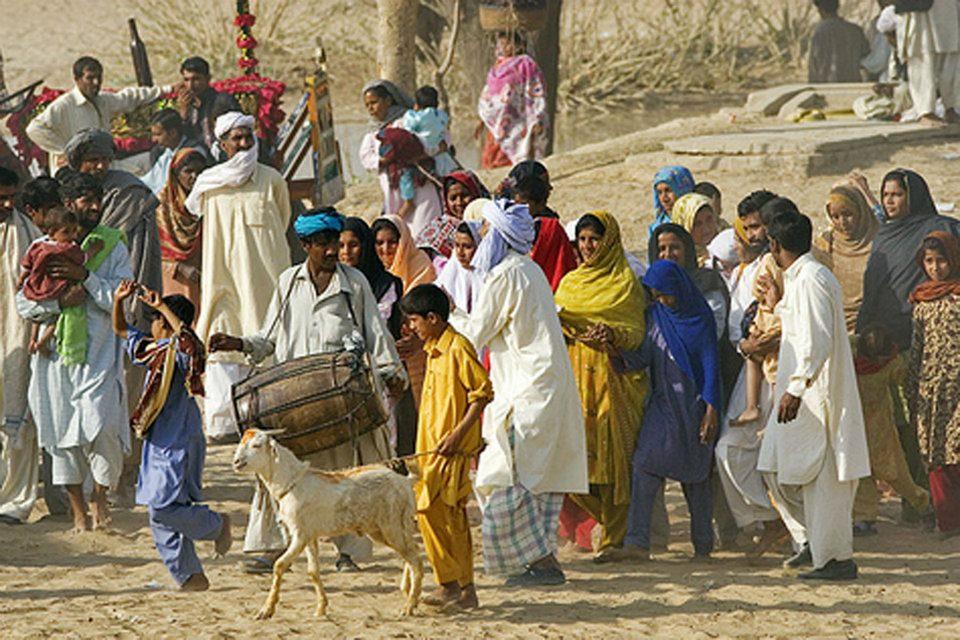
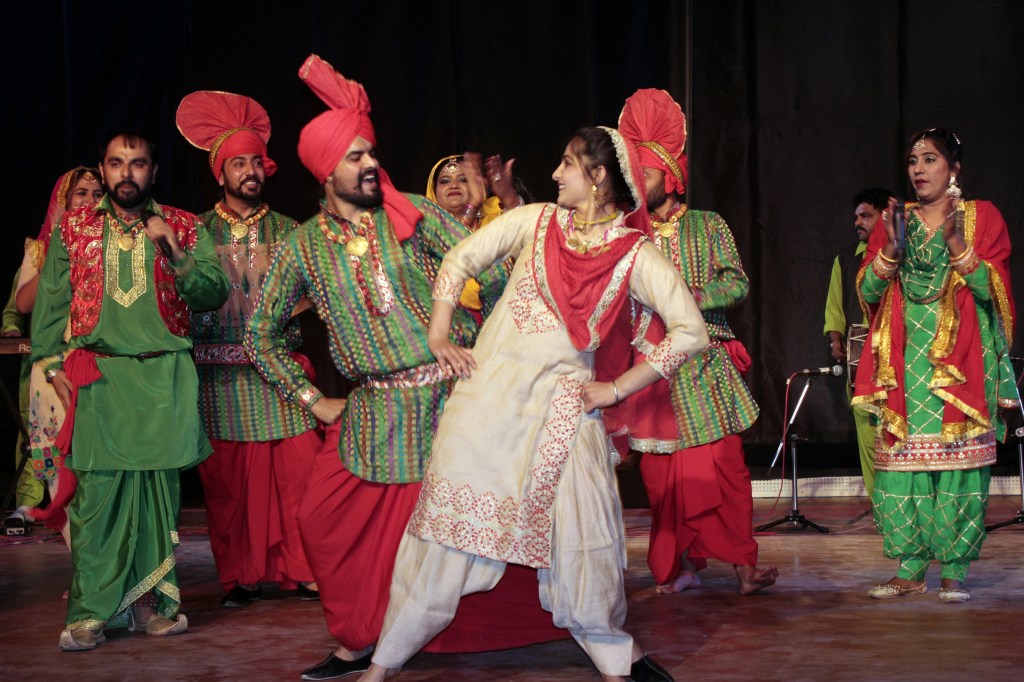
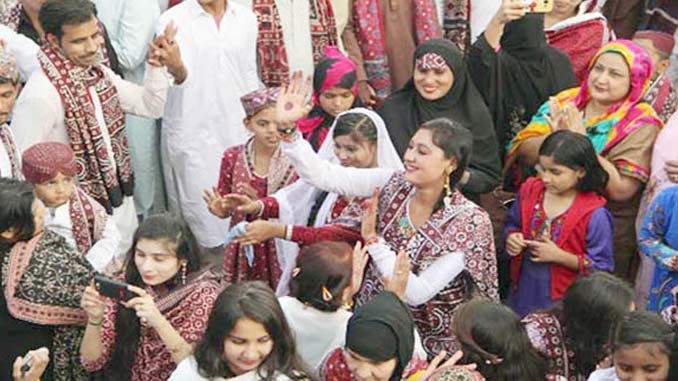
Society and culture of Pakistan comprises numerous diverse cultures and ethnic groups: Punjabi, Kashmiri, Sindhis, and Muhajirs in this; tribal cultures of baluchi and Pashtun in the west; and the old Dardic and Tajik communities in the north. These cultures Pakistanis have been greatly influenced in the cultures of the countries that the surround, like Turkic, Persians, Afghans, Indians in South Asia, Central Asia and Middle East.

PUNJABI

Punjabi are the ethnic majority in the Punjab region in Pakistan and northern India, which represents 44.7% of the population in Pakistan. The group belongs to the ethnic group Indo-Aryan. Punjabi identity is traditionally cultural, linguistic and geographical, and is independent of religion and historical origin. Punjabi people are tolerant of several religions, however, Muslims and Hindus form the religious majority among Punjabi. Sikhism and Christianity are also practiced in the area. Punjabi culture is that of the Punjab region, one of the oldest cultures in the world. The culture consists of poetry, spirituality, armament, music, cuisine, language, history and values.

SINDHI

Sindhi are natives of the Sindh province of Pakistan. This ethnic group forms 14.1% of the population of Pakistan. Sind province was one of the places where Islam was influenced by its location. Muslims had a great influence on the Hindu who initially resided in the region. The sindhis in Pakistan are mainly Muslims, Hindus and Sikhs. Sindhis culture is strongly influenced by the Islam, especially the first traditional names.

SARAIKI

Saraiki is a subgroup of the Punjabi people in Pakistan and speaks Saraiki dialect Spoken by Punjabi. This ethnic group forms 8.4% of the Pakistani population, although Most of Saraiki are counted among Punjabi groups. Saraiki people practice several religions but the majority are Muslims with a Christian minority. The culture of Saraikis has been greatly influenced by Punjabis due to their close association.

Gender roles

In Pakistan there is a dominant patriarchal structure that together with stereotypes cultural and traditional, they establish the roles of both women and men within of the family, and in any social field.

The sexual division of labor is very noticeable, most women are dedicated to household chores and parenting, while men take care of the political, religious, educational, legal activities, among others. When you talk about female characters, they are represented as defenseless, tolerant, pious and homemakers who support her husband. Women are shown in gender roles stereotyped: cooking, cleaning, washing clothes, raising their children and taking care of housework. The representation of women in professional life is also it limits to a reduced variety, in which professors and doctors appear, mainly.

The situation of women in Pakistan varies considerably according to social class, the region. Pakistani women today enjoy a better situation than most muslim women. However, the inferior situation of women with respect to men is fruit of the system, although the government and other groups have tried to raise the status of the women in Pakistani society.

Since the independence of Pakistan the literacy rate has greatly improved, despite of all, the educational situation of Pakistani women is among the lowest in the world. Currently due to the growth of the cultural level of the population there are more education opportunities for women. In spite of everything, women keep doing against atrocities such as rape, acid release, honor crimes, forced marriages, imposed prostitution, trafficking in women… The last few years have been witnesses of an increase in crimes against women.

On the other hand, in Colombia, the situation of inequality between men and women is not so strong as in Pakistan, but you can notice certain privileges and opportunities that men have and women don’t.

Cultural Model

Hofstede’s model serves to identify the cultural patterns of each group, the behavioral discrepancies and improve our understanding of other cultures by examining how cultural values ​​affect this behavior.

Power distance: Hofstede’s model says that Colombia has a high score, which it means that there is great social inequality. This inequality is accepted in all layers of society, so a union leader will have a lot of power focused on comparison with their union management team, and they in turn will have more power than others union members. While Pakistan has an intermediate score, it is therefore not possible to determine a preference in this dimension.

Individualism: both Colombia and Pakistan have a low score in this dimension, so which can be considered as collectivist societies. This means that it is very important to belong to a group and align with the opinion of that group. Relationships are more important than attending the task in question, and when a group of people has a opinion on a topic, all who feel part of that group will join. Loyalty in one collectivist culture is paramount and overrides most other rules and regulations social. Society fosters strong relationships where everyone takes responsibility for members of your group.

Masculinity: with a score of 64, Colombia is a highly oriented, masculine society to success and oriented. Colombians are competitive and status-oriented, but collectivist instead of individualists. Instead, Pakistan has a score of 50, which means that they don’t have preference in this dimension.

Uncertainty avoidance: both cultures have a high score in this dimension. Colombia has a score of 80, which means that they are looking for mechanisms to avoid ambiguity, from the way they express their emotions, to the rules that are created for all. Just like Pakistan, which has a score of 70, that is, they maintain rigid codes of belief and behavior and are intolerant of behavior and little ideas Orthodox, people have an internal impulse to be busy and work hard, precision and punctuality is the norm, innovation can be resisted, security is an element important in individual motivation.

Long-term orientation: Colombian culture is classified as normative, having a score under (13), people care about establishing an absolute truth, they respect the traditions and do not usually save for the future, but focus on achieving fast results. Otherwise, Pakistan has a score of 50, so you cannot determine your preference in this dimension.

Indulgence: with a score of 83, it can be said that Colombia is an indulgent country. People get carried away by their impulses and desires, act as they please, are optimistic and have a positive attitude, moreover, free time is important to them. On the contrary, Pakistan has a score of 0, that is, it is an extremely restricted society. People they usually control the satisfaction of their desires, are pessimistic, and think that their actions are restricted by social norms and it is wrong to please.

Overview

People are easily influenced and take everything they hear or the first thing they see as absolute truth. There are many stereotypes about Pakistan, for example, that everyone is Muslim; the majority are but we cannot generalize and say that they are all Muslims because Pakistan also hosts Hindu, Christian communities, among others. Some real aspects about Pakistani culture are:

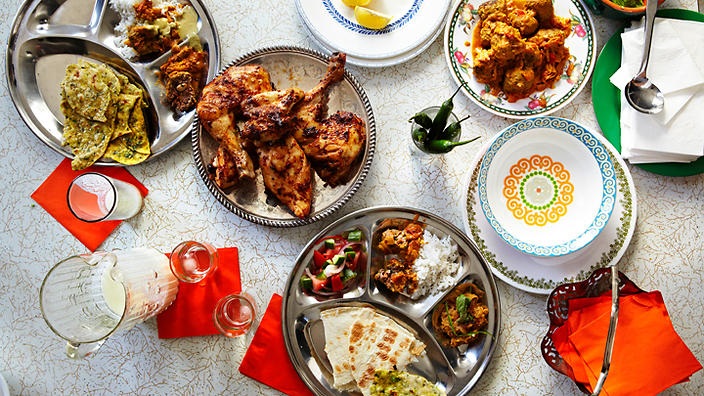
Regarding food, because most of the inhabitants are Muslims, they do not eat pork; So the basic foods are beef, chicken, fish and lamb. Wheat and flour products are considered the pillars of the daily diet, and the use of pickles, spicy sauces, preserves and sauces along with curried meats, seafood, vegetables and lentils, and that is why Pakistani cuisine has a flavor so unique. Green tea is the typical drink that is served at all meals.

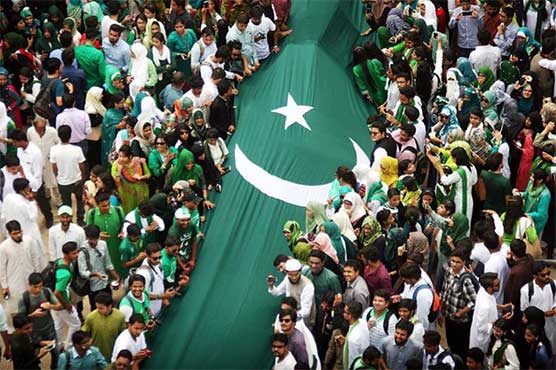
Official holidays include: Pakistan Day, March 23; Independence Day, August 14; among other.Pakistan has been considered a land of poetry, a great exponent is Faiz Ahmad Faiz. Music and dance are performed in classical and folkloric form. Usually, the artist wears a costume that presents an ethnic design. Dancing in a circle is the basis of Pakistani folk dances. Several other musical instruments are used, particularly dhol, a double-sided drum that is usually hung around the neck and played with sticks, while the dholkit is smaller and played by hand. In addition, the flute is often used.

The official language is Urdu, and English is also very common when it comes to business, but in Pakistan many different languages ​​are spoken.

A very common stereotype is about clothing, it is believed that women cannot have bare hair but in fact they can; they wear conservative attire that does not expose their arms or legs. For their part, men are obliged to cover anything between the navel and the knee.

Diseña un sitio como este con WordPress.com
Comenzar